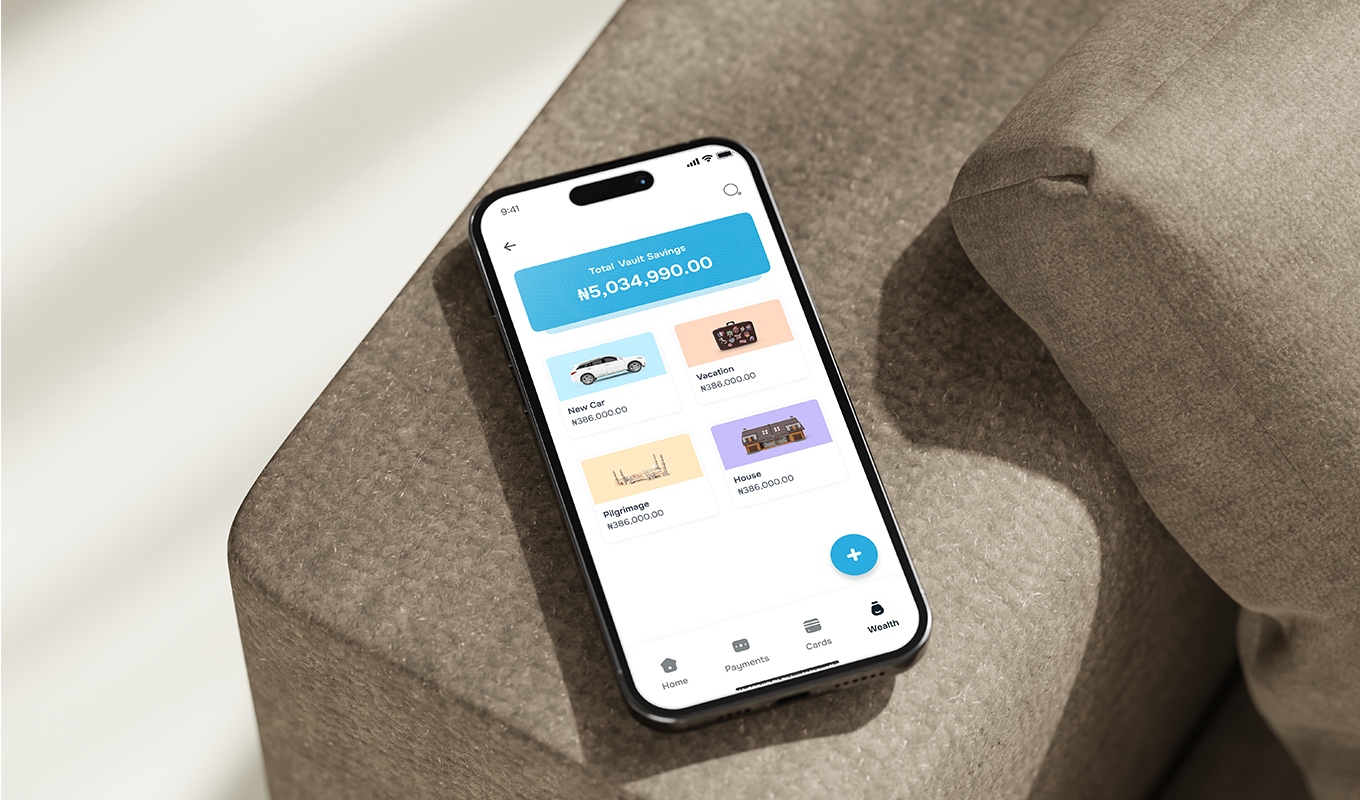
Ethical finance, everyday confidence
STECS is an ethical finance platform built for the Nigerian market, combining digital banking, savings vaults, investments, and financial education within a Shariah-compliant framework. Over two years, I led product design across the full ecosystem — from early branding to the interaction patterns that underpin the platform's core financial flows. The product needed to feel trustworthy enough for serious financial decisions while remaining simple enough for everyday users.
Where trust was leaking
Nigeria's ethical finance market had a design problem: the products that existed either felt generic and undifferentiated or were so technically minded that they pushed everyday users away at onboarding. STECS had real product ambition — digital banking, savings vaults, wealth features, and business accounts all in one — but without a coherent design system or consistent interaction language, scaling these features was slow and handoff between design and engineering kept losing fidelity.
One system across the product
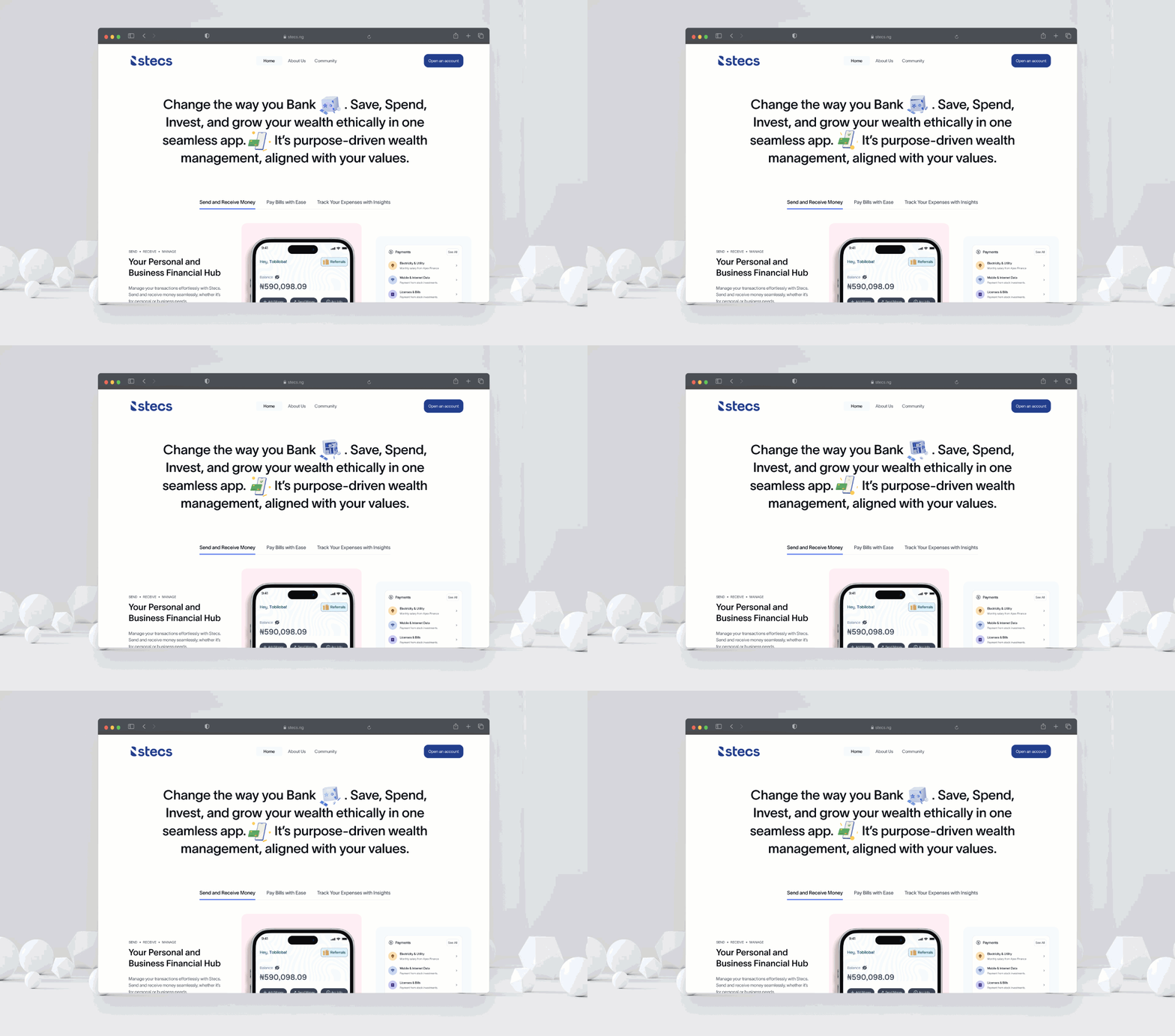
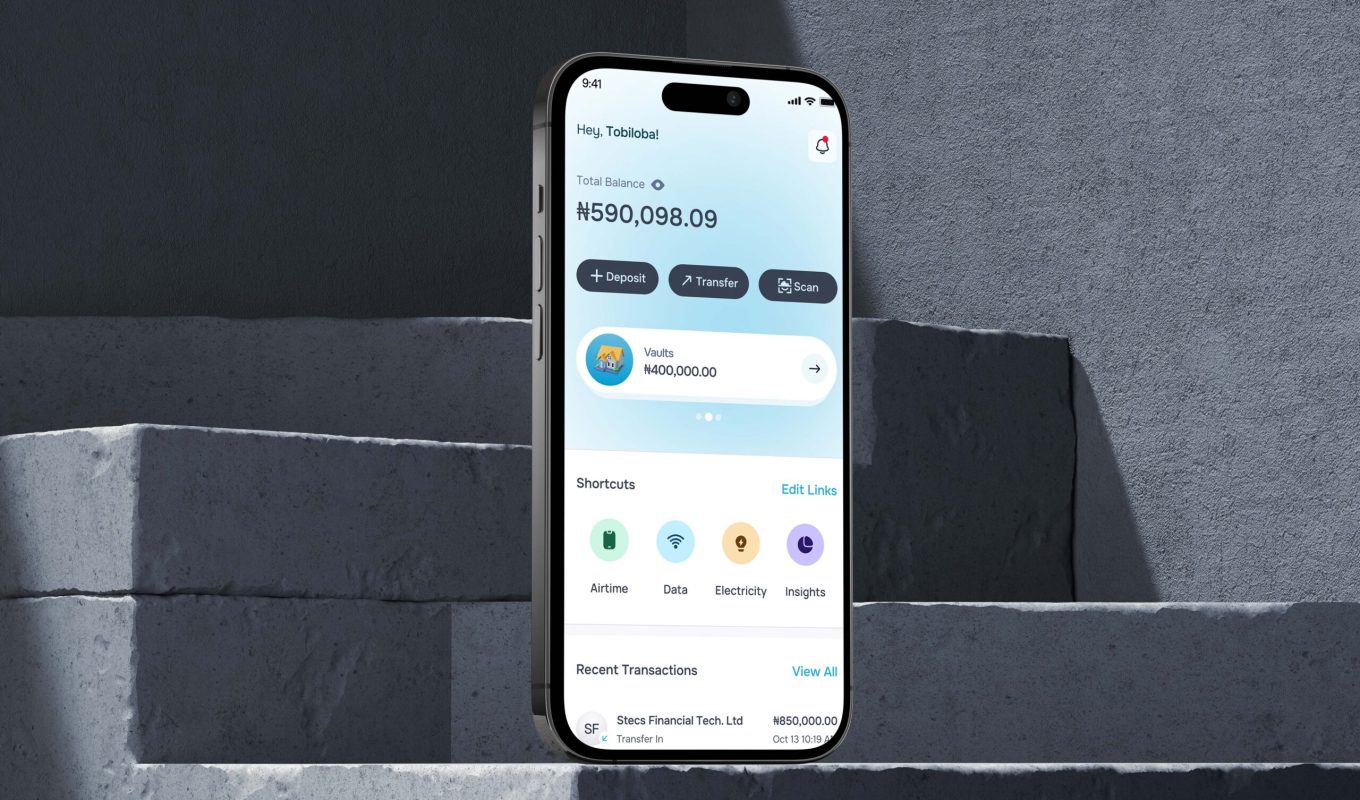
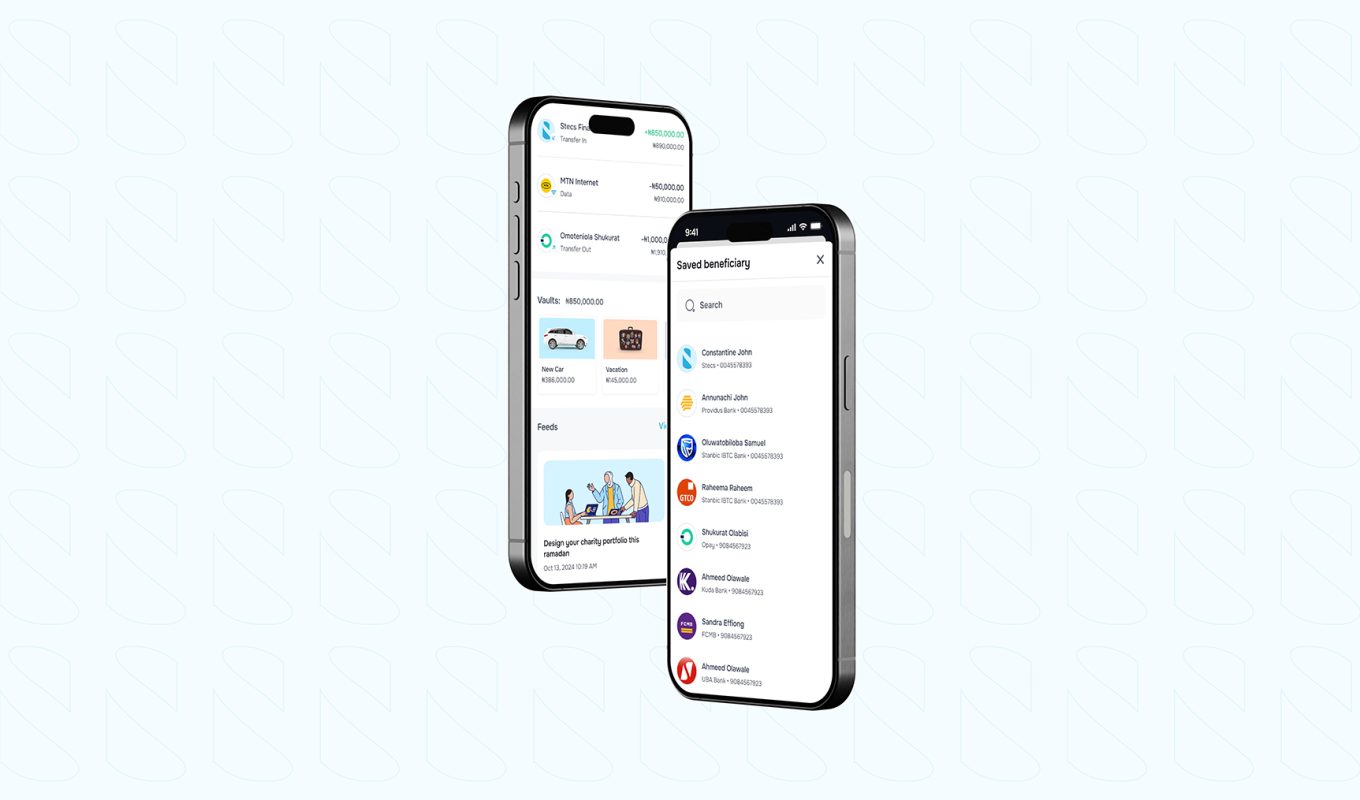
I designed a mobile-first product system across every core surface: account opening, KYC verification, fund transfers, bill payments, savings setup, investment actions, and business banking flows. Alongside the product UI, I built a Figma component library that mirrored the engineering team's React component structure — so handoff became a precise, documented exercise rather than a back-and-forth negotiation. Every component was annotated with interaction states, spacing rules, and conditional logic to reduce re-work on both sides.
Designing with engineering
Across two years, I connected product architecture, interaction design, and engineering-ready component documentation so new financial flows could grow from one dependable foundation.
- Audited the existing product to catalogue inconsistencies across screens, interactions, and component usage before building anything new.
- Mapped the full product ecosystem — personal banking, savings, investments, business accounts, and in-app education — and defined the experience principles that would govern all surfaces.
- Redesigned high-friction flows including onboarding, KYC, transfers, and savings setup with a clear priority on user confidence at every step.
- Built a Figma component library with explicit engineering parity so developers could reference exact token values, spacing logic, and state variations without guesswork.
- Used Islamic finance content architecture and trust signals to make Shariah-compliant features feel clearly differentiated — not just labelled differently.
- Established a documentation process for each design iteration so the team could build new features on top of a foundation they could actually navigate.
Reported product outcomes
What changed at scale
The platform grew to support over ₦1B in monthly transaction volume through the flows I designed. User retention reached 65% — significantly above the 40% average for digital finance products in the same market. The Figma component library reduced design-to-engineering handoff time by 50%, eliminating a major bottleneck that had been slowing feature delivery throughout the product's early life. STECS became a product that felt like one coherent system rather than a collection of features built at different times.
₦1B+
Monthly transaction volume
Processed through the product flows included in this work.
65%
User retention
Reported after the connected product experience matured.
50%
Faster design handoff
Reported after the shared Figma and engineering system was introduced.