From personal tool to product
NxxtJobs is an AI-powered job discovery and application management product for senior professionals actively looking for better roles. It started as a personal scraper for a senior product designer and evolved into a fuller SaaS concept: a daily job discovery engine, CV-aware scoring layer, personal job CRM, email digest, and application-prep workspace. My role covered product strategy, requirements definition, UX architecture, AI workflow design, and launch planning. The work was not just about designing screens; it was about shaping the product logic behind a trustworthy AI career tool. That meant thinking through the user's daily routine, the data model, AI cost controls, digest quality, legal/compliance requirements, and the product boundaries that keep it useful without becoming another noisy job board.
The signal problem
The core problem was not job scarcity. It was signal quality. Senior candidates often spend 30 to 60 minutes a day checking LinkedIn, Wellfound, Greenhouse, Lever, Google Jobs, MyJobMag, Jobberman, and individual company ATS pages, yet still miss roles that match their actual experience. Generic alerts increase volume but rarely explain fit, so users learn to ignore them. Even when a good role appears, the candidate still has to read the full description, compare seniority and skill requirements against their CV, decide whether the company is worth pursuing, then write a tailored cover letter or CV. That combination creates three layers of friction: discovery fatigue, fit uncertainty, and application drag. The product needed to reduce all three without pretending to apply on the user's behalf or replacing their judgment.
A daily job-search system
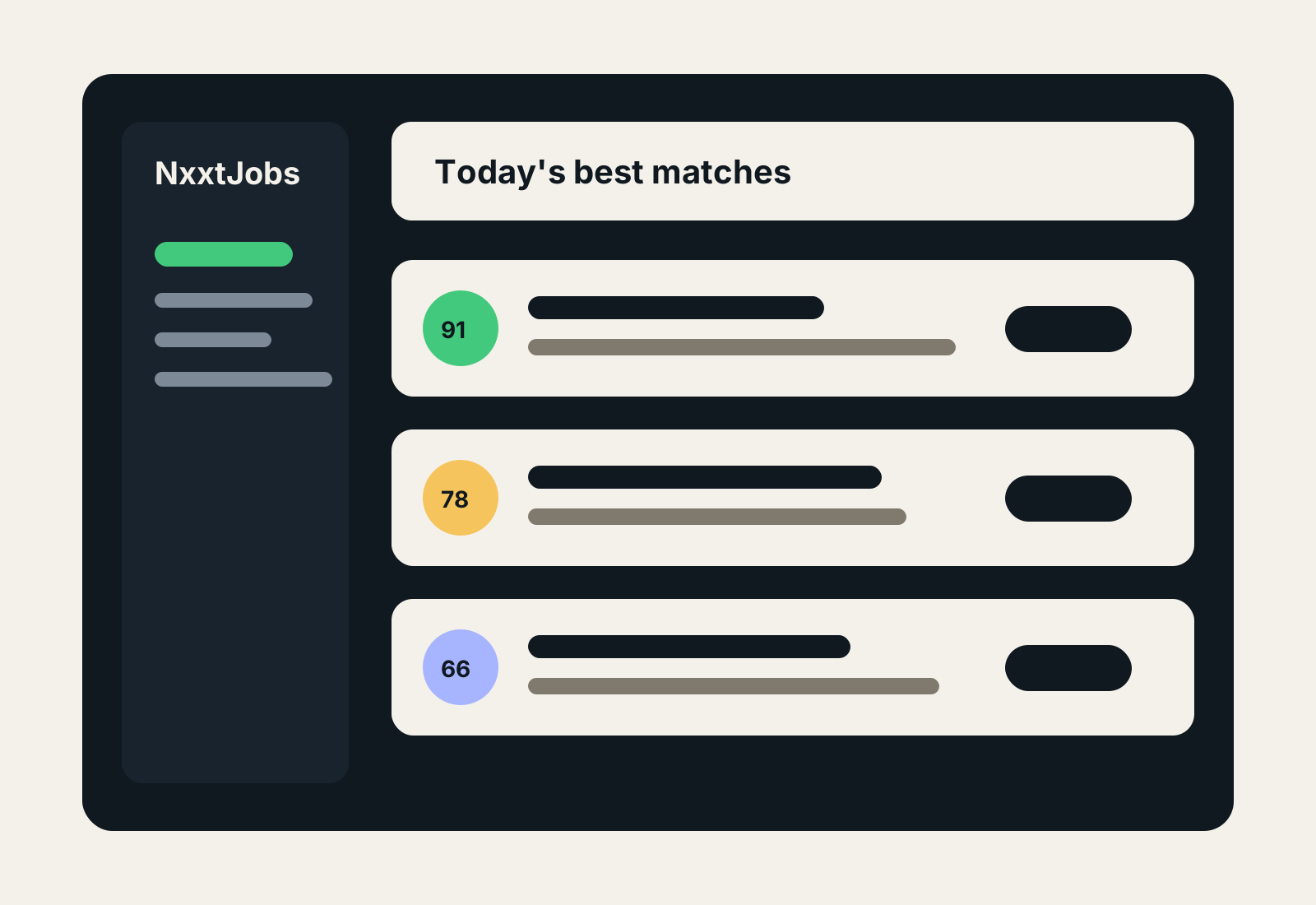
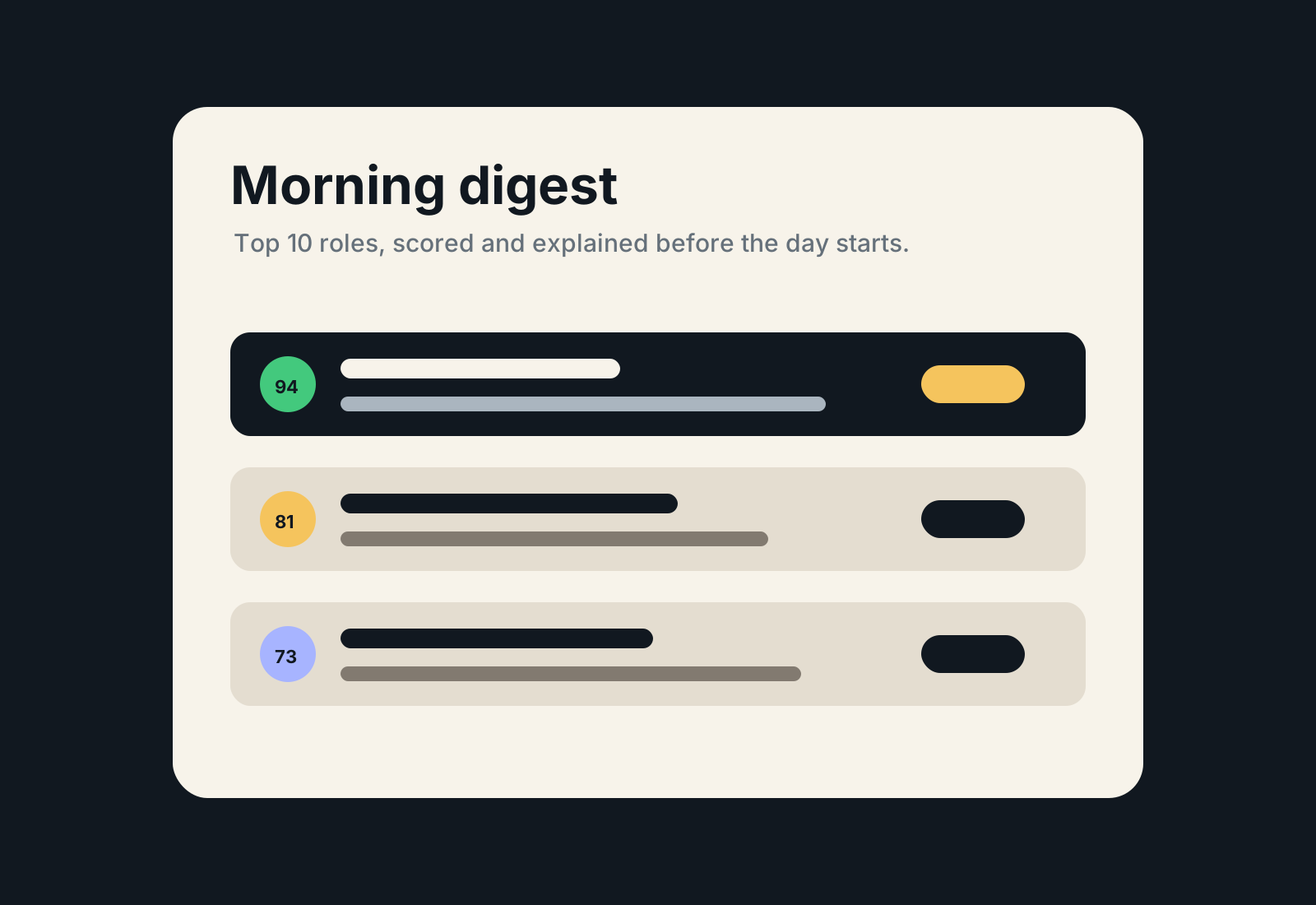
I defined NxxtJobs around a single daily workflow: wake up, review the best-matched roles, understand why each one fits, and prepare application materials without context-switching. The product scrapes jobs from multiple sources, normalises them into shared job records, scores each role, and presents the highest-signal matches through a dashboard and morning digest. The key design decision was to position NxxtJobs as a private job CRM and matching layer, not a public job board. Users can save, dismiss, mark applied, give feedback, and launch application support from each job card. The longer-term experience connects the match score to practical output: match reasons become cover-letter talking points, gaps become interview prep prompts, and emphasis points become CV tailoring guidance.
Designing trust into AI
I treated matching quality, user trust, data boundaries, operating cost, and launch readiness as one product-design problem rather than a collection of screens.
- Started by reframing the product from a scraper into a job-hunting operating system. I wrote a detailed PRD covering the target user, jobs-to-be-done, product goals, success metrics, feature scope, pricing model, launch gates, operational risks, and legal requirements.
- Defined the primary user as a senior IC who applies selectively and values fit over volume. That decision shaped the whole product: the dashboard prioritises relevance, explanation, and actionability instead of endless job listings.
- Mapped the full user journey from account creation to first useful match: email verification, CV upload or manual profile creation, AI profile extraction, search configuration, first dashboard state, daily digest, and application-prep actions.
- Designed the matching logic around cost and trust. Instead of calling Claude for every job-user pair, the architecture scores each job once to extract structured signals, then re-ranks those signals against each user's profile through a cheaper per-user matching layer.
- Specified the `JobMatch` model as the core product object: personal score, fit tier, match reasons, gaps, emphasis points, per-user status, and feedback. This prevents one user's save/apply/dismiss actions from affecting another user's dashboard.
- Structured the dashboard around fast evaluation: score ring, tier badge, company, location, source, match note, filters, sorting, pagination, status actions, thumbs feedback, and an expandable breakdown for reasons, gaps, and emphasis points.
- Defined empty states as part of the product experience rather than edge cases: no profile yet, no matches yet, all dismissed, and filters returning zero jobs each needed a different message and next action.
- Designed the digest logic to protect trust. The system should send only useful matches, skip empty digests, include the score and reason, isolate failures per user, and support pause/resume and one-click unsubscribe.
- Mapped the application support layer as a set of reusable artifacts: cover letter, tailored CV, interview prep, and application kit. Each artifact is generated from the same profile and job context, then saved so users can return later.
- Defined beta launch gates around safety and reliability: user-scoped data, no CV text logging, account deletion, data export, verified sender domain, legal pages, rate limits, and protections against cross-user data exposure.
A buildable beta path
NxxtJobs now has a clear product blueprint for moving from personal automation to public beta. The existing build already includes authentication, transactional emails, a dashboard, job cards, search configuration, multiple scrapers, AI scoring against a hardcoded profile, a single-recipient digest, and scheduled Railway cron jobs. More importantly, the roadmap is now precise: migrate scoring to per-user `JobMatch` records, build CV upload and AI profile extraction, scope all dashboard data by user, fan out digests safely, add legal/compliance flows, enforce tier limits, and prepare billing through Stripe and Paystack. The strongest outcome is product clarity. The case study shows how I think through AI products beyond interface polish: matching quality, user trust, data ownership, cost controls, digest reliability, privacy, launch gates, and monetization all had to be designed together.